Introduction
Think about how many apps your team uses every day. Not just the big ones — Microsoft 365, Salesforce, Slack. Think broader. That project management tool the marketing team signed up for last quarter. The AI writing assistant your content team started testing. The analytics platform your sales team connected to your CRM.
Now ask yourself: do you know what access each of those apps has to your environment? What data it can read? What it can do on your behalf?
If the answer is “not really,” you’re not alone. But you’re also exactly the target the 2026 threat landscape was built to exploit.
GenAI-powered SaaS supply chain breaches have emerged as one of the most significant and underappreciated risks of 2026. This isn’t a theoretical future problem. It’s happening now — and most organizations don’t even know they’ve already been exposed.
In this post, you’ll learn:
- • Why SaaS supply chain attacks have exploded in 2026
- • How GenAI apps are creating entirely new attack vectors
- • Real examples of supply chain breaches and what went wrong
- • A practical framework to discover, assess, and secure your SaaS attack surface
What is the SaaS Supply Chain — and Why Should You Care?
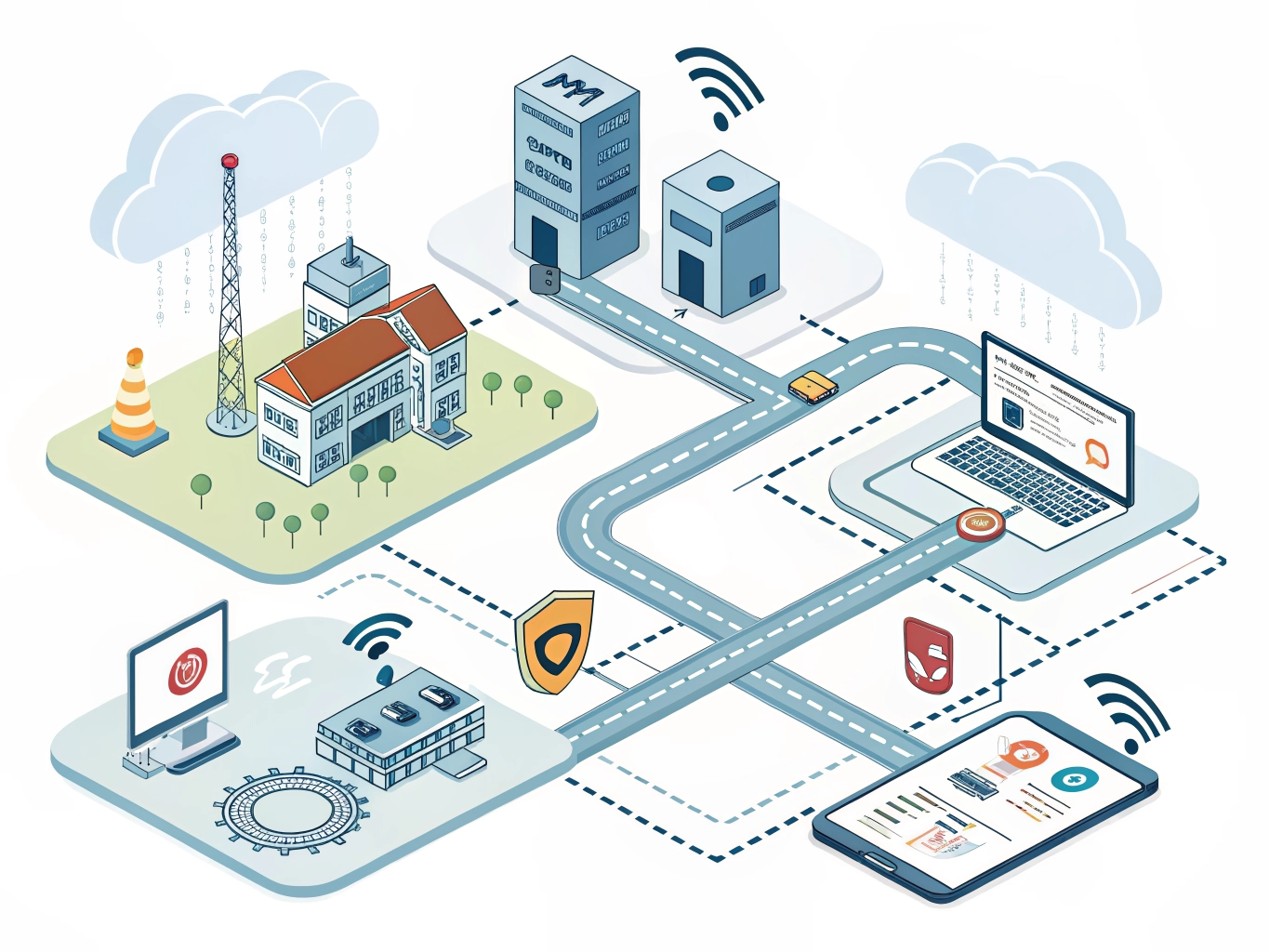
Your organization’s SaaS supply chain is the web of third-party applications, integrations, and services that connect to your systems. Every OAuth connection, every API integration, every “Sign in with Google/Microsoft” is a thread in that web.
The value is obvious: these integrations make your tools work together seamlessly. The downside? Every one of those threads is a potential entry point for attackers. And unlike traditional software supply chains (which have defined versions, patches, and visibility), SaaS supply chains are dynamic, often invisible, and dangerously undermanaged.
Consider this: the average enterprise uses over 250 SaaS applications. Most IT and security teams have visibility into only a fraction of them. The rest? Shadow IT — running in the background, granted broad permissions, unmonitored.
Now layer in GenAI. Large Language Model (LLM) apps, AI assistants, AI-powered analytics tools — these need even more access to be useful. They read your emails, your documents, your data streams. They plug into your workflows. And attackers have taken notice.
Why 2026 is the Year SaaS Supply Chain Attacks Go Mainstream
The Cloudflare 2026 Threat Report flagged SaaS supply chain exposure as a primary concern for security teams this year. But why now?
The GenAI Factor
GenAI apps are different from traditional SaaS in one critical way: they need deep access to your data to function. A project management tool doesn’t need to read your executive emails. But an AI-powered tool that promises to “search across all your company knowledge” — that does.
These apps are often granted OAuth access to Microsoft 365, Google Workspace, Slack, and more. They become privileged data aggregators. And if compromised, they become a single point of failure that exposes everything.
Attackers understand this. They’ve shifted from trying to breach hardened targets directly to finding the weakest app in your supply chain — and using it as a pivot point.
The OAuth Attack Playbook
OAuth is the backbone of SaaS integration. It allows apps to access your data without requiring your password. That’s convenient — and dangerous. Here’s the typical attack sequence:
- Attackers compromise a SaaS app (often a lesser-known one with poor security)
- They use that app’s OAuth token to access connected services
- They escalate, moving from the compromised app to email, cloud storage, or sensitive databases
- Data exfiltration begins — often silently, over weeks
As Unit 42’s 2026 Incident Response Report documented, multi-app attack chains like this are becoming the norm — and SaaS integrations are a favorite entry point.
Real-World Breaches: What the SaaS Supply Chain Looks Like in Practice
Still not convinced this is a real problem? Let’s look at what 2026 has already delivered.
The GenAI SaaS Data Exposure Wave
In early 2026, multiple organizations confirmed breaches tied to third-party GenAI applications. In some cases, the compromised app had access to years of historical communications, contracts, and internal documents. The attackers didn’t need to breach the company’s infrastructure — they breached an app that the company had invited into its infrastructure.
OAuth Tokens: The Gift That Keeps on Giving
Unlike passwords, OAuth tokens don’t expire quickly — some are valid for weeks or months. This gives attackers a wide window. Even after a breach is discovered and the original app is locked down, stale tokens can remain active, giving attackers continued access.
The Hidden Dangers in Your SaaS Stack Right Now
Before you can defend against SaaS supply chain risks, you need to understand what you’re actually working with. Most organizations are flying blind.
1. Shadow IT: The Apps You Don’t Know About
Teams sign up for SaaS tools all the time without IT approval. These tools often get OAuth access to company accounts — and never get audited. Microsoft Entra ID and similar tools can help surface these connections, but only if you look.
2. Overprivileged OAuth Permissions
When you authorize a SaaS app, it asks for specific permissions — some reasonable, some excessive. But who reviews these? Many apps request access far beyond what they actually need. An AI note-taking app doesn’t need full read access to your entire OneDrive. But if you approved it without checking, that’s exactly what it has.
3. Dormant Integrations That Are Still Active
You stopped using a tool years ago. You forgot it existed. But its OAuth token? Still active. Still connected. Still a potential entry point. These dormant integrations are a ghost threat — present but invisible until an incident surfaces them.
How to Defuse the SaaS Supply Chain Time Bomb
The good news: you can substantially reduce your SaaS supply chain risk with discipline and the right process. Here’s how.
Step 1: Discover Your Entire SaaS Footprint
You can’t protect what you can’t see. Use tools like Microsoft’s application discovery tools, ServiceNow, or Zscaler to surface every connected app — approved or not. Look for SSO logs, OAuth permissions, and API activity that indicate shadow IT.
Step 2: Audit Permissions with a “Never Granted, Always Questioned” Mindset
For every connected app, ask: does this need this level of access? Revoke anything that seems excessive. Treat new app permissions as a security decision, not an IT formality. At minimum, review:
- • Read vs. write permissions
- • Scope of data access (full mailbox vs. specific folders)
- • Whether the app can perform actions on your behalf (send email, modify files)
Step 3: Implement least privilege for OAuth tokens
Use OAuth scopes carefully. Prefer read-only permissions where possible. For high-risk apps, require re-authorization periodically — this kills stale tokens that attackers might be holding.
Step 4: Monitor App Activity Continuously
Set up alerts for unusual app behavior — mass data access, bulk downloads, logins from new locations. AI-powered SOC tools can help detect supply chain anomalies at scale, flagging the early signals of a compromised app before attackers can exfiltrate data.
Step 5: Build an App Onboarding Policy
Every new SaaS tool that wants OAuth access should go through a lightweight approval process. You don’t need bureaucracy — just a simple security review: Who owns this? What access does it need? Is there a more trusted alternative? When in doubt, default to no.
What to Do If a Supply Chain App is Compromised
Despite best efforts, incidents happen. If a connected SaaS app is breached:
- Revoke its OAuth tokens immediately — cut off access at the source
- Audit its activity logs — determine what data it accessed and for how long
- Notify affected teams — treat it like a data breach, because it is one
- Rotate credentials — any secrets or API keys the app used should be rotated
- Conduct a post-mortem — how did it get in? What did we learn?
The SaaS Supply Chain Security Checklist
- • ☑️ Discovered and documented every SaaS app with OAuth access
- • ☑️ Audited permissions for every connected app
- • ☑️ Revoked excessive or unnecessary permissions
- • ☑️ Dormant integrations identified and revoked
- • ☑️ Alerts set for anomalous app activity
- • ☑️ App onboarding policy established
- • ☑️ Incident response plan includes SaaS supply chain scenarios
- • ☑️ Regular (quarterly) SaaS access reviews scheduled
Conclusion: You Invited Them In — Now Secure Them
The SaaS supply chain isn’t a risk you can eliminate by throwing technology at it. It’s a governance challenge that requires visibility, discipline, and ongoing attention. The apps your team uses are powerful — by design. That power is what makes them valuable. It’s also what makes them dangerous.
The organizations that will survive 2026’s threat landscape aren’t the ones with the biggest security budgets. They’re the ones who know what their SaaS apps can do, control what they actually need, and watch what they’re doing.
Don’t wait for a breach to find out how many apps are connected to your environment. Start your audit today — before attackers do it for you.
About the Author: Syed Adil Hussain is a cybersecurity professional helping organizations secure their digital infrastructure. Connect with him on LinkedIn or reach out directly at thecyberguy90@gmail.com.